
The Future of Robotic Food Preparation
From a head-mounted GoPro to robotic chefs, Cloud Chef is rethinking how food gets made. Its “Zippy” system trains robots in minutes to handle complex kitchen tasks, bringing consistency, efficiency, and scalability to an industry facing severe labor shortages.

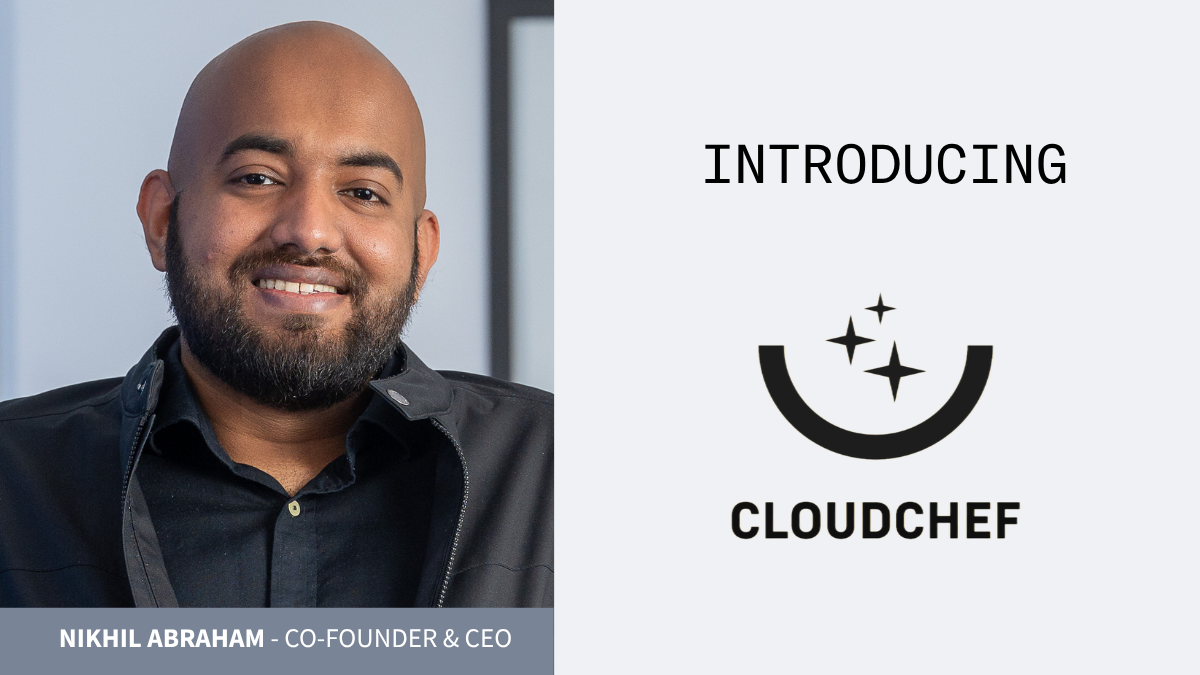
GUEST AUTHOR: Nikhil Abraham, Co- Founder & Co-CEO of CloudChef
Some of us have the Midas touch in the kitchen. Others, not so much. Struggling with my own culinary challenges led me to do what any technologist would do—strap a GoPro to my head to watch myself (or someone else) cook, and learn how to do better.
As it turned out, however, video recording a complex, multi-staged process like cooking proved to be a remarkably effective path to training robot chefs—and thereby solving a huge problem for the food service industry. When I later met Kittu at a Christmas party held by a fellow Indian Institutes of Technology (IIT) alumnus, Cloud Chef was born.
Here is the problem we are working to solve: From industrial kitchens to fast food chains to high-end, sit-down restaurants, meal preparation is hard work. It requires application of experience, instinct, and judgment, while executing dozens of repetitive tasks quickly, safely, and identically, in a noisy, crowded, high-heat and high-stress environment. It should surprise no one, therefore, that the industry faces many human resource challenges: 59% of restaurant operators routinely struggle to fill chef or line cook positions; Annual turnover is as high as 133%; and cooks cost employers an average of $30 per hour in the United States—before benefits.
These characteristics make food preparation an industry ripe for help from robotic technology. But it’s not easy. Cooking is a high-precision, highly-variable, and highly-unstructured activity, requiring specialized training. For that reason, previous attempts at automation failed.
At Cloud Chef, we solved this problem with “Zippy”— a culinary intelligence training and operation system that empowers off-the-shelf, general purpose, two-fingered robots to execute 85% of line cook requirements. With Cloud Chef training, these robots can pick ingredients, pour, sautée, flip, stir and much more. We also equip each robot with a thermal camera so that it can observe the results of its work, mimicking the instincts of a human chef, and producing each meal with perfect consistency.
Teaching Zippy robots a new dish takes mere minutes, using a proprietary video training system descended from my original Go-Pro experiment. To date, Zippy can produce thousands of recipes representing 17 cuisines. And the more dishes Zippy learns, the more culinary intelligence it brings to bear on future tasks. That makes staffing up or down as easy as putting a new robot on the line for as long or as short as needed. (And of course, robots don’t call in sick, sleep, or suddenly quit).
Best of all, food preparation companies can rent rather than buy Cloud Chef robots for as little as $12 per hour, allowing them to produce Michelin star quality food, at McDonald’s prices. Zippy is already deployed in restaurants, catering operations for universities, airlines, and corporations, as well as direct-to-consumer “ghost kitchens.”
Rising hiring and retention challenges are pushing restaurants toward a new reality: robots in the kitchen. What started as a head-mounted experiment is now quietly redefining the future of food preparation, making culinary excellence reliable, repeatable, and affordable.