
The $500 Billion Security Industry Is Getting an AI Upgrade
Hakimo is bringing AI to physical security, turning existing cameras and security systems into an always-on intelligent monitoring network that can detect threats, respond to incidents, and help protect people more effectively.

Nationwide, a burglary takes place every 40 seconds, adding up to some $23 billion in losses. Office and commercial complexes, multi-family residential buildings, hotels, storage facilities, and other large centers install cameras and hire security guards to watch them, but these defenses have an obvious weak spot: human limitations.
A single security guard or remote monitor may be responsible for dozens of camera feeds at once, often for long and uneventful hours. The moment that they look away or take a break, those camera feeds are left unattended. And even when cameras are fully monitored, the tedium of the work can easily erode a guard’s vigilance, leading to missed incidents and security footage that only serves after something has gone wrong. At an average security guard wage nearly $20 per hour, the shortcomings of this approach come into full focus.
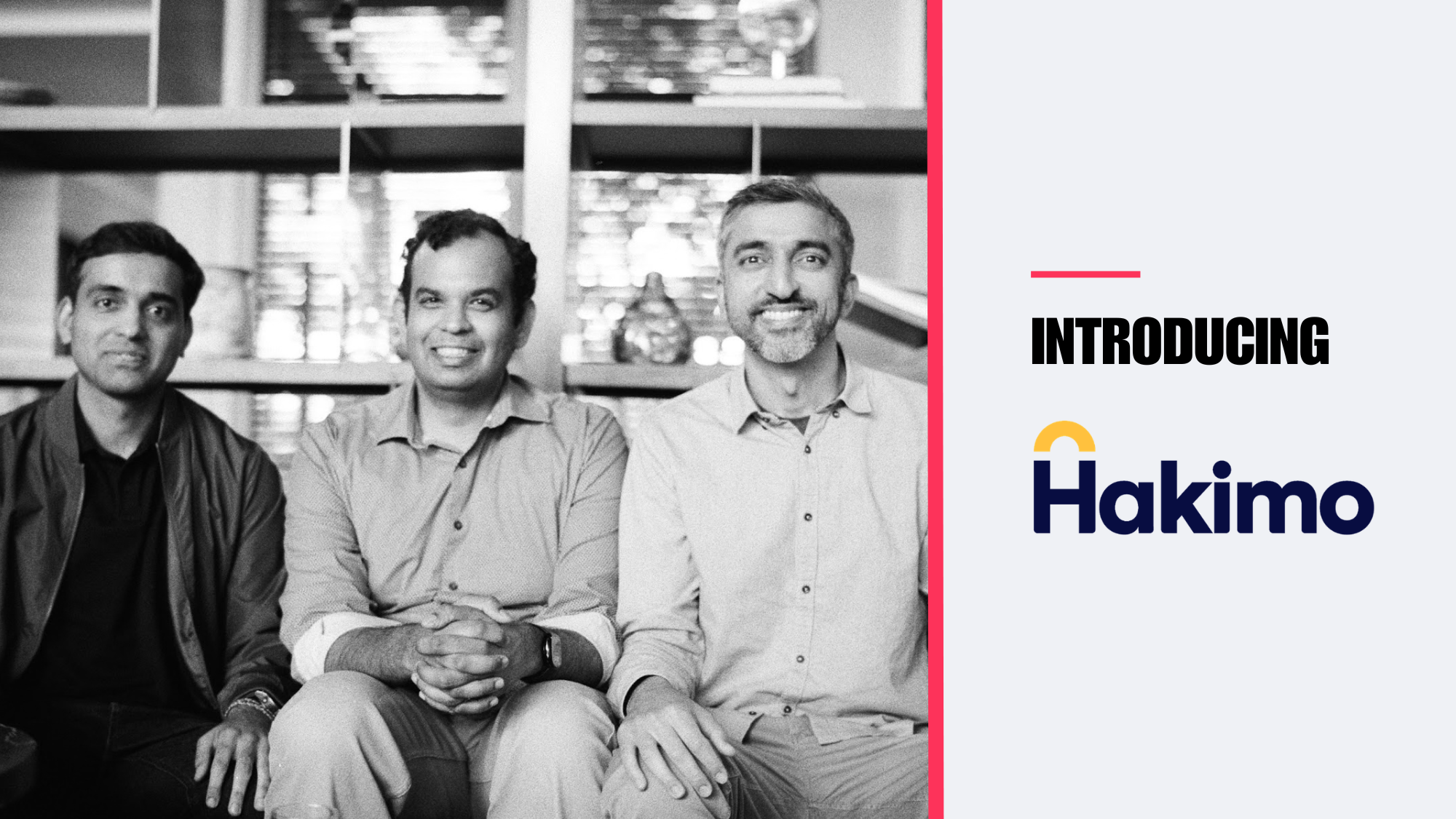
Stanford computer vision researchers Sam Joseph and Sagar Honnungar thought there had to be a better way. In early 2020, they began exploring how advances in AI, combined with cheaper and better cameras, could transform physical security. Rather than first building the technology and then trying their luck in the market, the pair interviewed hundreds of customers at gas stations, convenience stores, corporate campuses, construction sites, car dealerships, and other facilities where security cameras were prevalent. What emerged from this deep customer discovery process was the formation of the AI-powered security monitoring company Hakimo.
Hakimo turns existing cameras, badge readers and other security infrastructure into an always-on intelligent monitoring network. Its AI Operator combines computer vision with generative AI, allowing customers to define detection alerts they care about, using natural language. Hakimo can flag trespassing, tailgating, smoking, vandalism, weapons, unusual after-hours activity and even correctly identify the presence of specific banned individuals, using facial recognition. When Hakimo discovers a genuine incident, it escalates the matter to a human operator or automatically executes a predefined response procedure such as alerting a human guard or sounding a customized trespass message.
This approach radically changes the economics and effectiveness of security monitoring. Instead of having three shifts of humans continuously watch banks of screens, Hakimo monitors every camera simultaneously and continuously, alerting humans only when needed. And because Hakimo sits on top of existing cameras and security systems, it can be deployed quickly, without the need to rip out and replace existing infrastructure.
Hakimo can also be an invaluable forensic tool. While scouring hours or days of tape is prohibitively time intensive, Hakimo empowers human investigators to define exactly what they are looking for, and show them only those time signatures that match.
The Security Industry Association estimates the worldwide physical-security equipment-and-services market could approach $500 billion in 2026. And Hakimo is beginning to show meaningful scale: As of July 2026, it reported more than 300 customers, revenue that had tripled year over year, and $32 million in total funding.
Hakimo founders' original vision now looks to be on the way to becoming an inevitable reality: the future of security isn't about installing more cameras or hiring more guards. It is about leveraging the power of AI to improve situational awareness and protect people from danger.